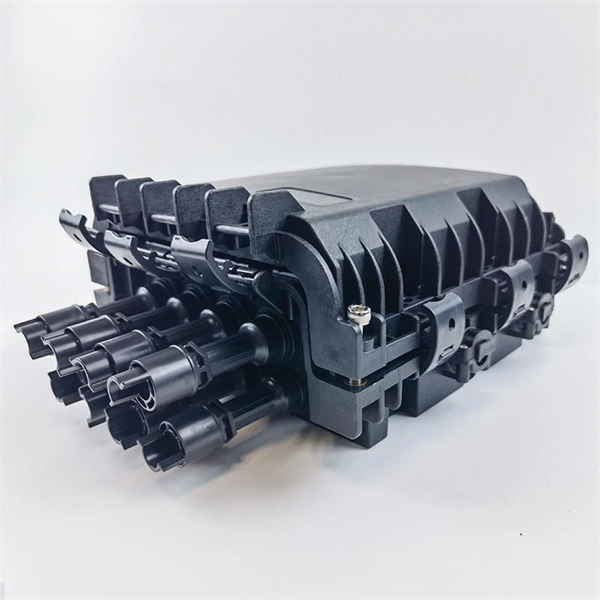
Distributed AI Server
An AI distributed server is a networked system where AI workloads are executed across multiple autonomous nodes, combining specialized AI hardware with distributed computing to optimize performance, scalability, and resilience.Overview of Distributed AI ServersA distributed AI server is not a single machine but a coordinated network of servers and devices that collaboratively process AI workloads. Unlike traditional centralized AI systems, which rely on a single data center or cluster, distributed AI spreads computation and intelligence across multiple nodes, often geographically dispersed, to reduce latency, improve fault tolerance, and handle massive data volumes efficiently .Key Architectural FeaturesAutonomy and Decentralization: Each node operates independently, making local decisions and executing tasks without constant central oversight .Collaboration and Coordination: Nodes communicate through protocols or message passing to synchronize models, share knowledge, and refine global AI outputs .Heterogeneous Hardware: Distributed AI servers often include GPUs, AI accelerators, high-speed memory, and specialized networking hardware to handle compute-intensive tasks like training large language models or real-time inference .Data and Computational Locality: By processing data closer to where it is generated (edge devices, IoT sensors, or on-premises servers), distributed AI reduces the need for massive data transfers and mitigates bottlenecks .Benefits of Distributed AI ServersScalability: AI workloads can scale horizontally by adding more nodes, allowing systems to handle increasing data volumes and computational demands .Fault Tolerance: Decentralized control ensures that a failure in one node does not halt the entire system, enhancing reliability for mission-critical applications .Optimized Resource Allocation: AI algorithms can dynamically balance workloads, allocate CPU, GPU, and memory efficiently, and predict demand to maintain performance .Low Latency and Real-Time Processing: Distributed nodes near data sources enable faster decision-making, crucial for autonomous vehicles, predictive maintenance, and augmented reality .Data Sovereignty and Compliance: Distributed infrastructure allows sensitive data to remain on-premises or within specific regions, meeting regulatory requirements while still enabling AI processing .ApplicationsDistributed AI servers are increasingly used in industries requiring high-performance, low-latency AI, including:Autonomous vehicles for real-time navigation and decision-makingIndustrial IoT for predictive maintenance and process optimizationHealthcare for distributed medical imaging analysisFinancial services for fraud detection and risk modelingCloud and edge AI platforms that integrate multicloud resources for global AI workloads .ConclusionAn AI distributed server combines the specialized hardware of AI servers with the resilience and scalability of distributed systems. By decentralizing computation and leveraging collaboration among heterogeneous nodes, these systems overcome the limitations of centralized AI, enabling faster, more reliable, and compliant AI operations across diverse environments .